

In This Blog
Dementia affects not just memory, but mood, behaviour, judgment, and communication. These progressive symptoms make daily life challenging for both individuals and their families.
The question many caregivers ask is:
“Can someone with dementia safely remain at home under live-in care?”
The answer is yes: with the right support structures, live-in care for dementia can be one of the most effective, dignified ways to support someone living with dementia.
Understanding Dementia and Its Care Needs
Dementia is a term used to describe a range of symptoms associated with cognitive decline. It includes Alzheimer’s disease, vascular dementia, Lewy body dementia, and more.
The most common form of dementia, Alzheimer’s, gradually impairs memory, reasoning, and behaviour, often requiring increasing levels of care and supervision.
Individuals with dementia benefit from predictable routines, personalised interaction, and familiar environments, all of which live-in care is uniquely positioned to offer.
Why Live-In Care Works for Dementia Patients
Staying in a Familiar Environment
Remaining at home helps anchor memory and reduce confusion. A familiar setting supports recognition of surroundings, objects, and daily patterns, which is particularly helpful during the early to moderate stages of dementia.
It contrasts with care homes, where relocation often triggers anxiety, disorientation, or decline.
One-to-One, Consistent Care
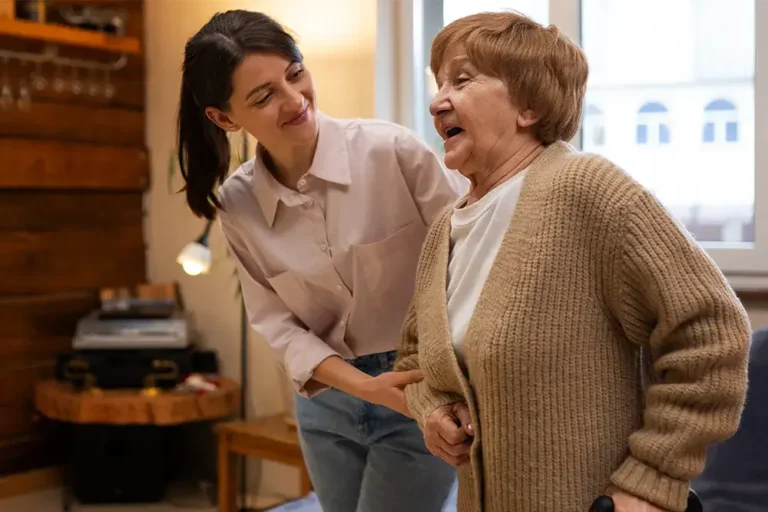
A live-in carer fosters deep, trusting relationships with the individual, which is essential for providing adequate dementia support. This continuity helps the carer identify changes in condition, manage behaviours gently, and reduce agitation.
In institutional settings, rotating staff may not always have the familiarity to provide nuanced behavioural care.
Cognitive Stimulation and Emotional Support
Live-in carers can provide one-on-one memory-enhancing activities:
- Life story work
- Music therapy
- Puzzles and card games
- Repetitive routines and orientation cues
They also offer calm reassurance, companionship, and presence, all of which are critical in managing mood swings, sundowning, or social withdrawal.
Safety Monitoring and Night-Time Supervision
Wandering, confusion, and falls are common symptoms associated with dementia. A live-in care arrangement provides round-the-clock oversight with real-time intervention, especially at night.
Whether responding to toilet needs or restlessness, carers can reduce the risk of injury and anxiety during vulnerable hours.
Personalised Routine and Flexibility
Unlike care homes with fixed schedules, live-in carers work around the individual’s rhythm. It minimises disruption and supports autonomy—whether that means sleeping in, eating at specific times, or repeating preferred rituals.
What Makes a Live-In Carer Suitable for Dementia Support?
| Attribute | Why It Matters |
| Dementia-specific training | Enables carers to manage challenging behaviours compassionately |
| Patience and empathy | Supports emotional regulation and relationship building |
| Communication skills | Helps with non-verbal cues, repetition, and reassurance |
| Understanding of memory loss patterns | Allows tailoring of routines and activities |
| Risk awareness | Prevents wandering, falls, or unsafe actions |
Enhancing Home Safety for Dementia
Live-in carers often recommend minor changes to make the home safer:
- Installing grab rails
- Removing trip hazards
- Using signage or labels
- Locking medicine cabinets
- Setting up fall detection devices
When Live-In Care May Not Be Suitable
In late-stage dementia with severe aggression, high-dependency medical care, or where home environments can’t be modified safely, specialist nursing homes might be a better fit.
In such cases, respite care or a transition plan can still be supported through a live-in care team.
Final Thoughts
Live-in care offers a person-centred, home-based alternative that honours the dignity, identity, and preferences of someone with dementia.
It provides flexible, responsive, and familiar care backed by trained professionals who bring safety, stimulation, and stability to daily life.





1 thought on “Is Live-In Care Suitable for Dementia Patients?”
When my Alzheimer’s symptoms began to worsen forgetting names, losing my way, and struggling with everyday tasks I felt overwhelmed and frightened. Traditional medications offered limited help, and I started to believe there was nothing more that could be done. That’s when I discovered Consummate Care.From the very beginning, their approach felt different. The team took time to listen, understand my symptoms, and tailor a natural herbal therapy specifically for me. Within a few weeks, I began noticing changes my thoughts felt clearer, I had fewer moments of confusion, and even my mood improved. My family noticed the difference too.While Alzheimer’s is still a part of my life, I finally feel like I have a sense of control again. They didn’t just offer treatment they offered hope, compassion, and genuine care. If you or a loved one is navigating Alzheimer’s, I strongly recommend reaching out to them. It could be the turning point you.